Changelog

What changed in the game, release by release. Newest first.

  1. v3.2.0

    Almost two weeks have passed since the new site opened, and I'm really happy with how the launch went. Thank you for the great welcome and for all your reports! This release fixes what the first week showed me, and brings some of the things you have asked for since.

    Your club's history

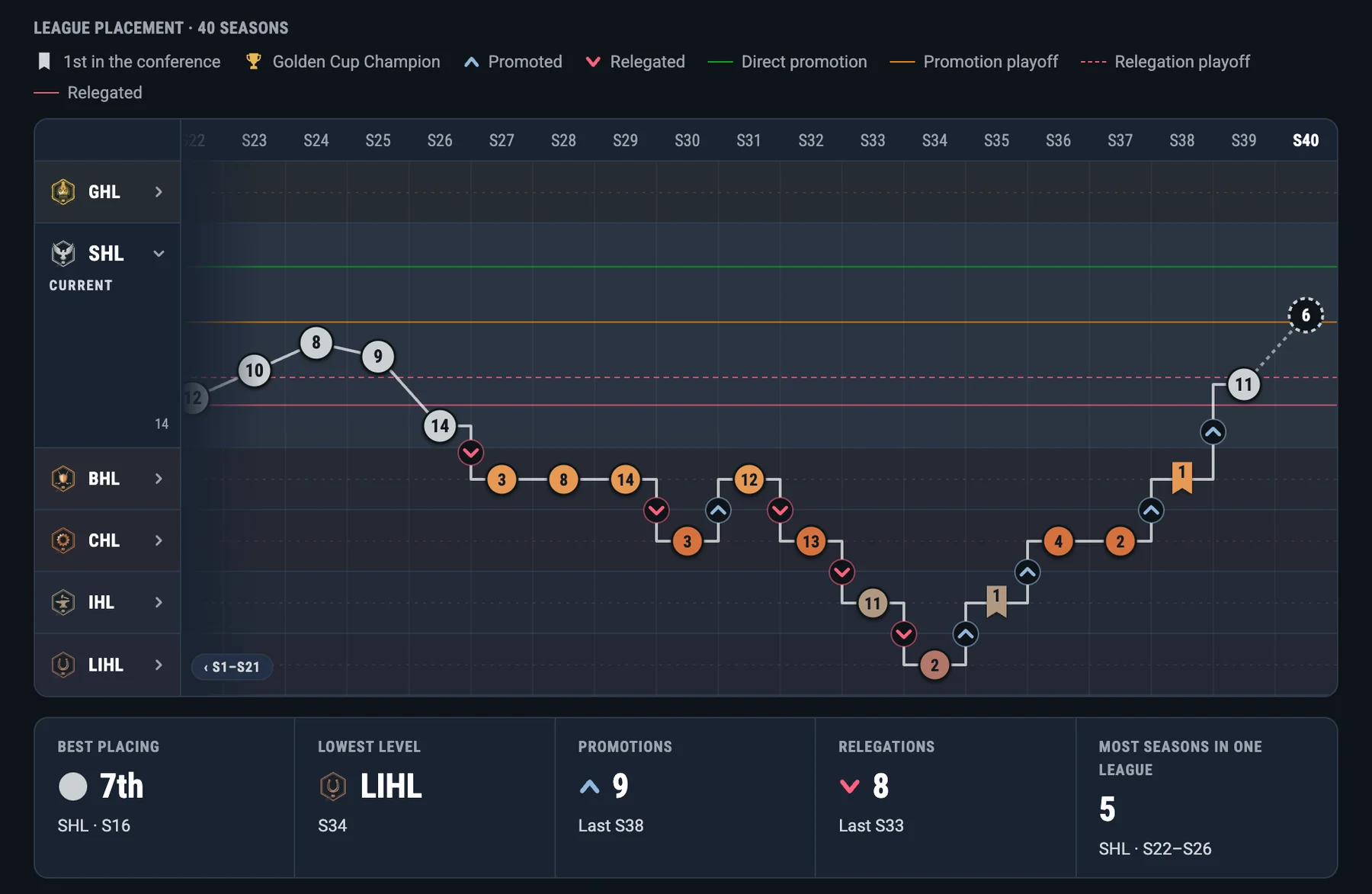
    The History tab now tells your club's story. A chart puts every season in the league the club played in, with every climb and every fall, and the records show the players who hold them. On top of it a short written story tells the club's greatest years and where it stands today.
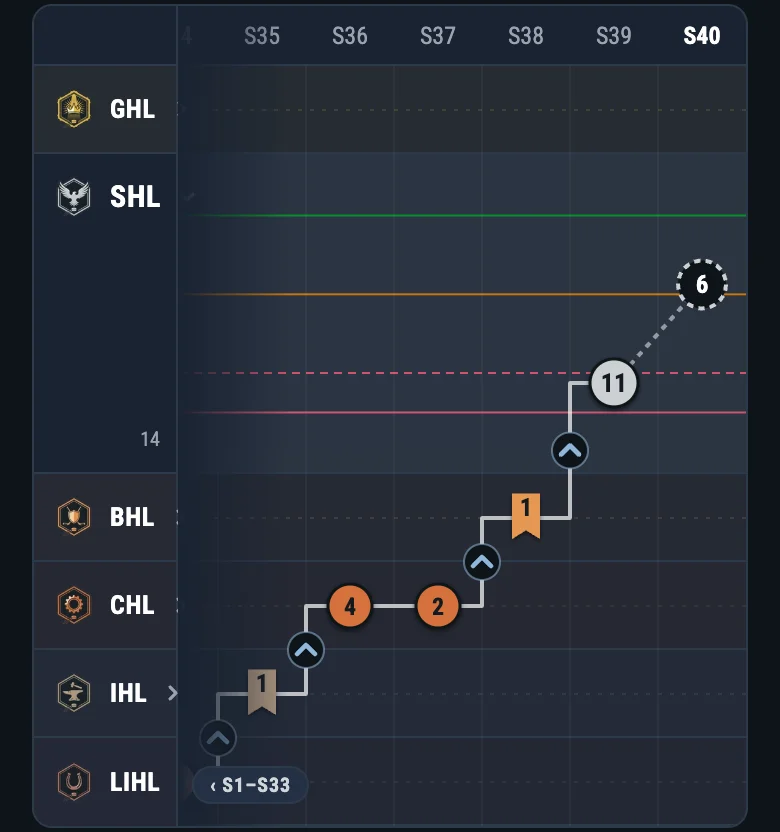
    The league chart on a phone: the Chargers' climb from the LIHL back to the SHL, season by season.
    The Adrian Chargers' last twenty seasons, from the SHL down to the LIHL and back up again.

    Light or dark

    The game now comes in a light theme too. Pick Dark, Light or System under Theme in Settings, and the Manager's Guide follows your choice.
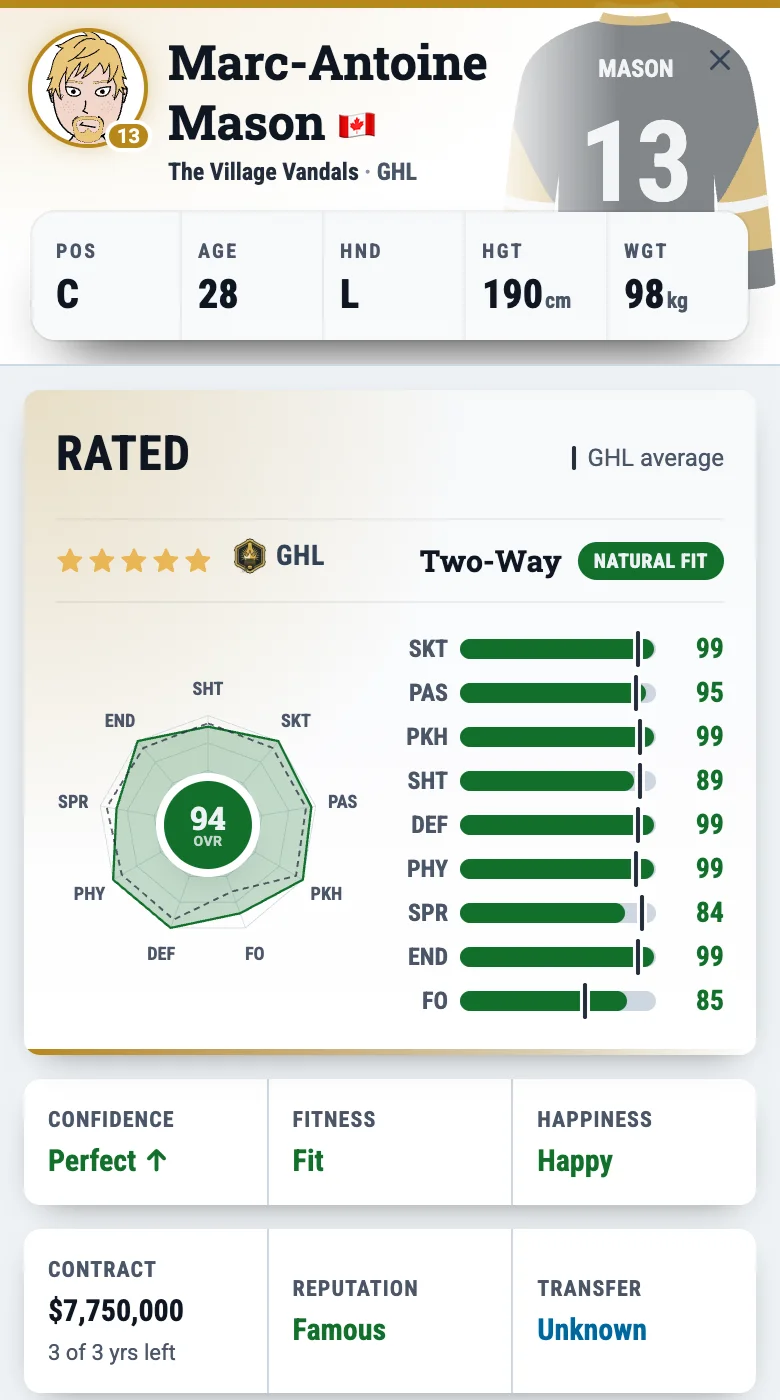
    Marc-Antoine Mason's player panel on a phone in the light theme: his position, age and size, his ratings and his status.
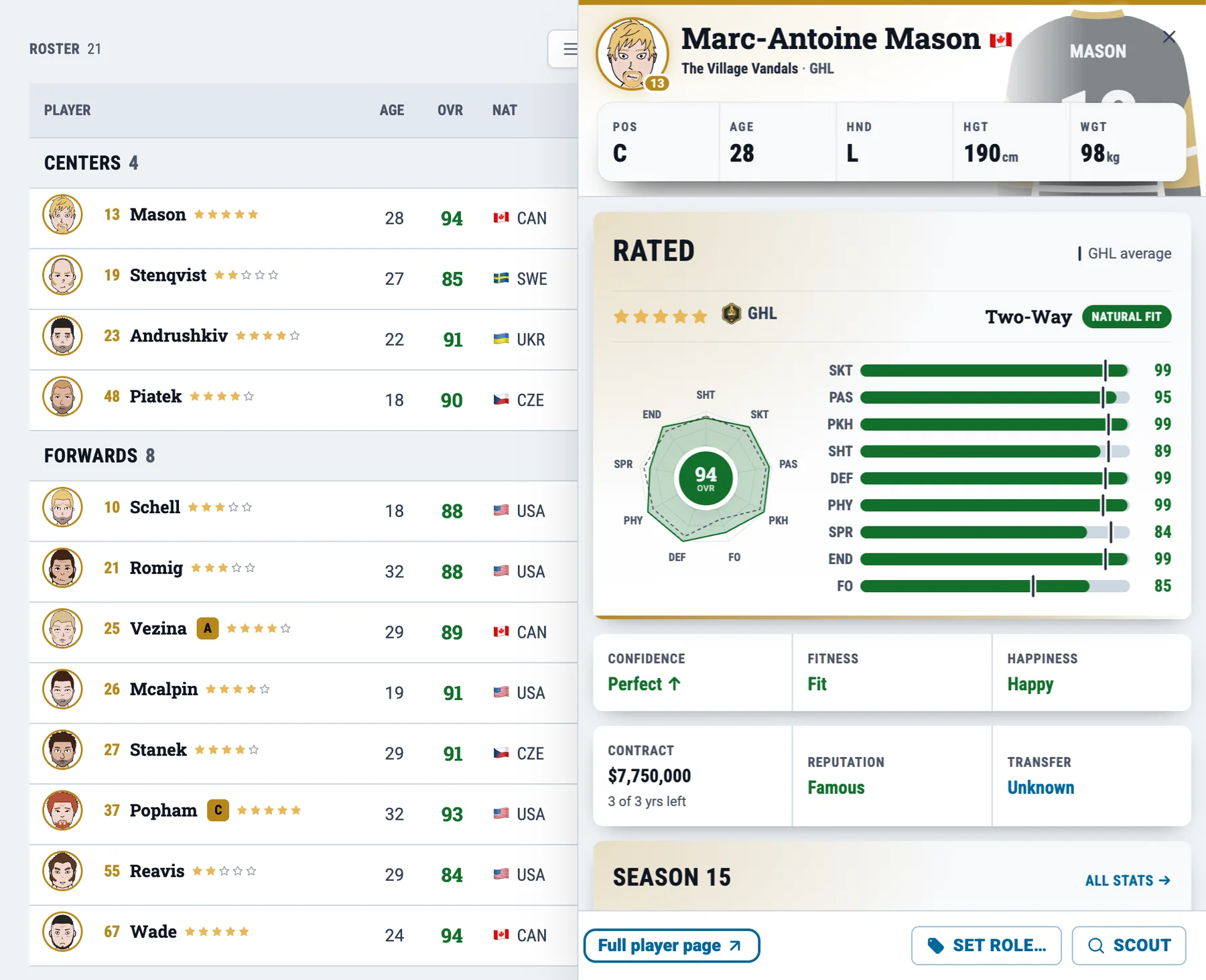
    The Village Vandals' roster with Marc-Antoine Mason's player panel open, in the light theme.

    From the community

    Asked for by managers who play the game.

    • Who won the faceoff. The live commentary now says who won the faceoff, in games played from this release on.

    New

    • Likes and mentions in the chat. Give a message a thumbs up, and mention clubs and managers with @, not only players.
    • Players learn their roles. Players get more familiar with the roles they play, from New to Mastered. You see it in Role assignments, on the player page and in contract offers.
    • Notifications in your browser. Get told when your games are played, when a bid or a trade touches your club, and about the youth draft. Turn them on in Settings, under Preferences.
    • Offer a place in the lineup. A contract offer now lets you choose the place in the lineup you promise him, not only his role.

    The engine

    • Players now judge their ice time and their role separately, and how much they accept depends on who they are and how the team is doing. Please note that this can change how your players feel about their minutes.
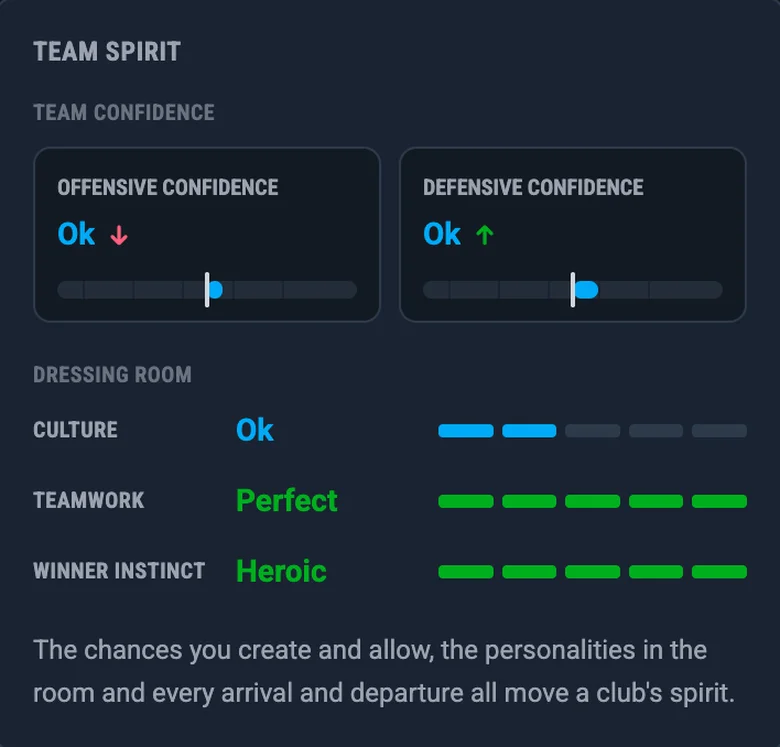
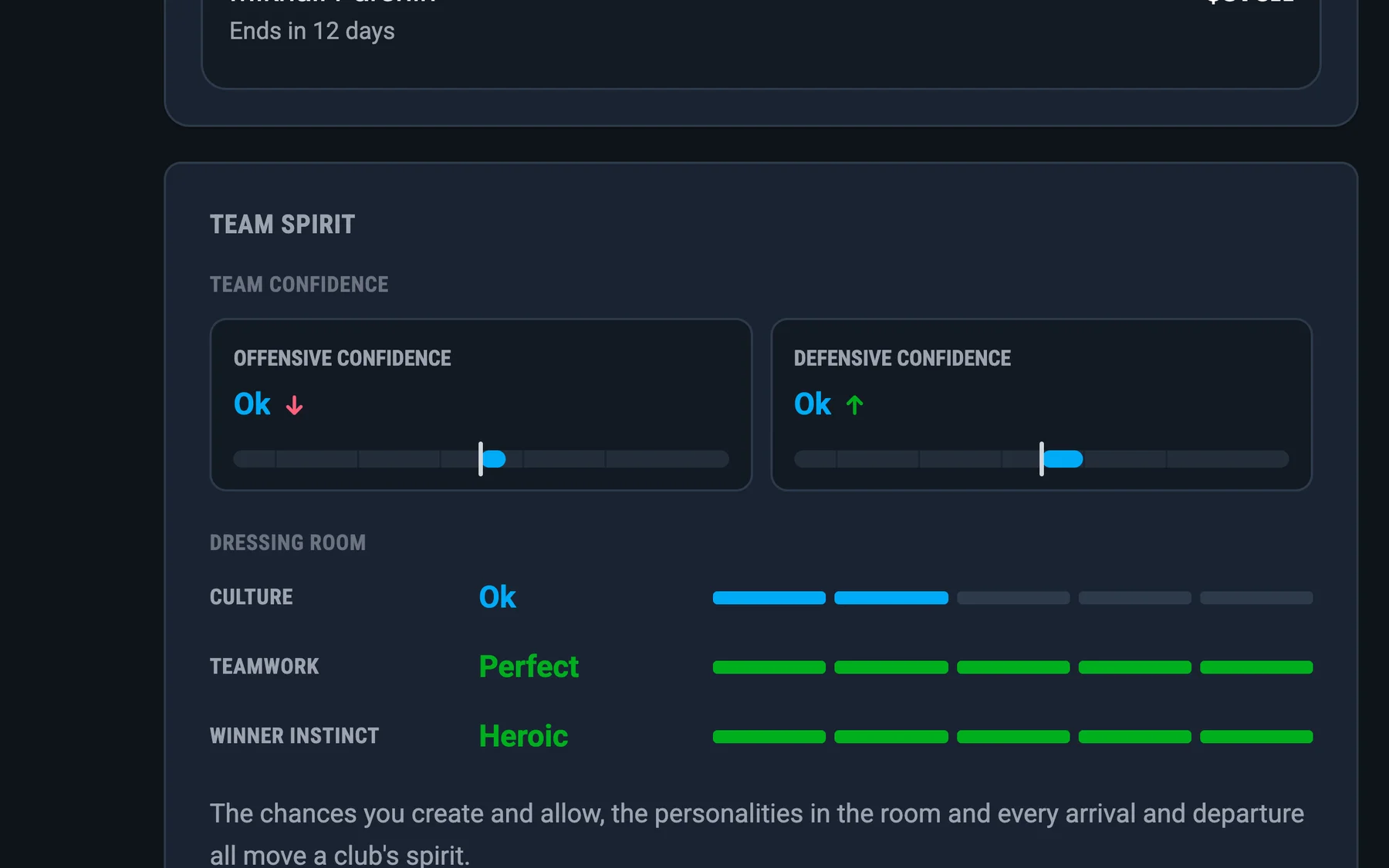
    • Team confidence now follows how you played against the matchup, not how many chances there were.
    • Line and pair focuses rebalanced.
    • New signings get a few days to settle in before they judge their ice time.
    • Computer clubs no longer send trade offers after the trade deadline.

    Improvements and fixes

    • Trades. The trade block shows only players you can trade for, the Trades screen names the other club’s manager, and a red count in the menu shows offers waiting for your answer.
    • Contracts. A contract shows the place in the lineup and the role it promises, and an agreed deal shows its clauses. Scouting reports use the same words.
    • Players. Morale names the teammate a player gets along with or clashes with, the Development tab lists his roles again, and a second personality is only shown by scouting again.
    • Lineup. The roster keeps its order when you pick a spot, and the Show menu follows the spot’s key ratings.
    • Live games. The commentary says who won a fight, and the momentum band is now called momentum.
    • Game report. Easier to read, and it says when you were outshot.
    • Records and points. The pre-game view and your team page count records and points the way the standings do.
    • Trophies and history. Missing Golden Cups are back, the cup always goes to the winner of the final, and cups and promotions from a season you left afterwards now count.
    • Career Start. Recommends the worlds and leagues where other managers play.
    • Notifications. Your world’s news comes first, with admin announcements in a tab of their own, and an earlier season’s days are no longer mixed into this one.
    • Chat. Follows the world you switch to, and a club’s name takes you to its page.
    • The written biography on a player’s page is better.
    • The world’s player list ranks by reputation again.
    • Club colours can no longer be picked twice in the franchise editor.
    • Flags show on Windows.
    • Strong ratings show green again.
    • The roster’s age profile counts from the youngest.
    • The Scouting Center lists the newest reports first.
    • The whole table row lights up when you point at it.
    • Patreon reminders show the right price.
    • Team pages load much faster.
    • Stability improvements.
  2. v3.1.1

    The engine

    • Every Golden Cup and promotion counts in full, also when you won another in a different world at the same time.

    Improvements and fixes

    • Manager reputation. Once you have won a Golden Cup the press calls you champion for good, a GHL regular-season title gets its own press line, and the Managers list ranks managers by their career.
  3. v3.1.0

    This release starts a series of updates about you, the manager. The goal is a manager profile that tells your story, from where you started to what you won and where you stand right now. The first step is a rebuilt reputation, and more will follow.

    From the community

    Asked for by managers who play the game.

    • Manager reputation, rebuilt. Your reputation now lives in each world you play in, on a ladder from Newcomer to Legend, and every season adds to an all-worlds total with up to five stars. The stars open leagues, uneven trades and the extra club. The press may now introduce you with a line or two, and your manager card keeps every trophy world by world.

    Improvements and fixes

    • Player pages. A skater’s Season figures lead with games played, and the biography names the club that made the draft pick.
    • Clubs wearing Red Brown can save their franchise again.
  4. v3.0.0

    Version 3.0.0 is a new Game Plan Hockey Manager, built around the same game. Everything you know is still here, rebuilt, and the engine underneath it has learned a few things.

    The live broadcast

    Every game day the whole round goes out live, at the same time for everyone in the world: your own game in focus, the rest of the round around it, and the chat beside it. The play is called as it happens: who made the pass, the rush, the puck given away. Until the broadcast is over the round hasn't happened anywhere else in the game, so nothing gives a score away, and missed games wait for you as replays afterwards.

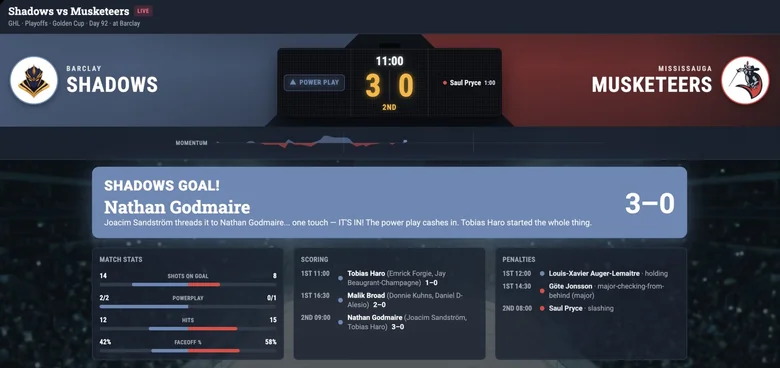
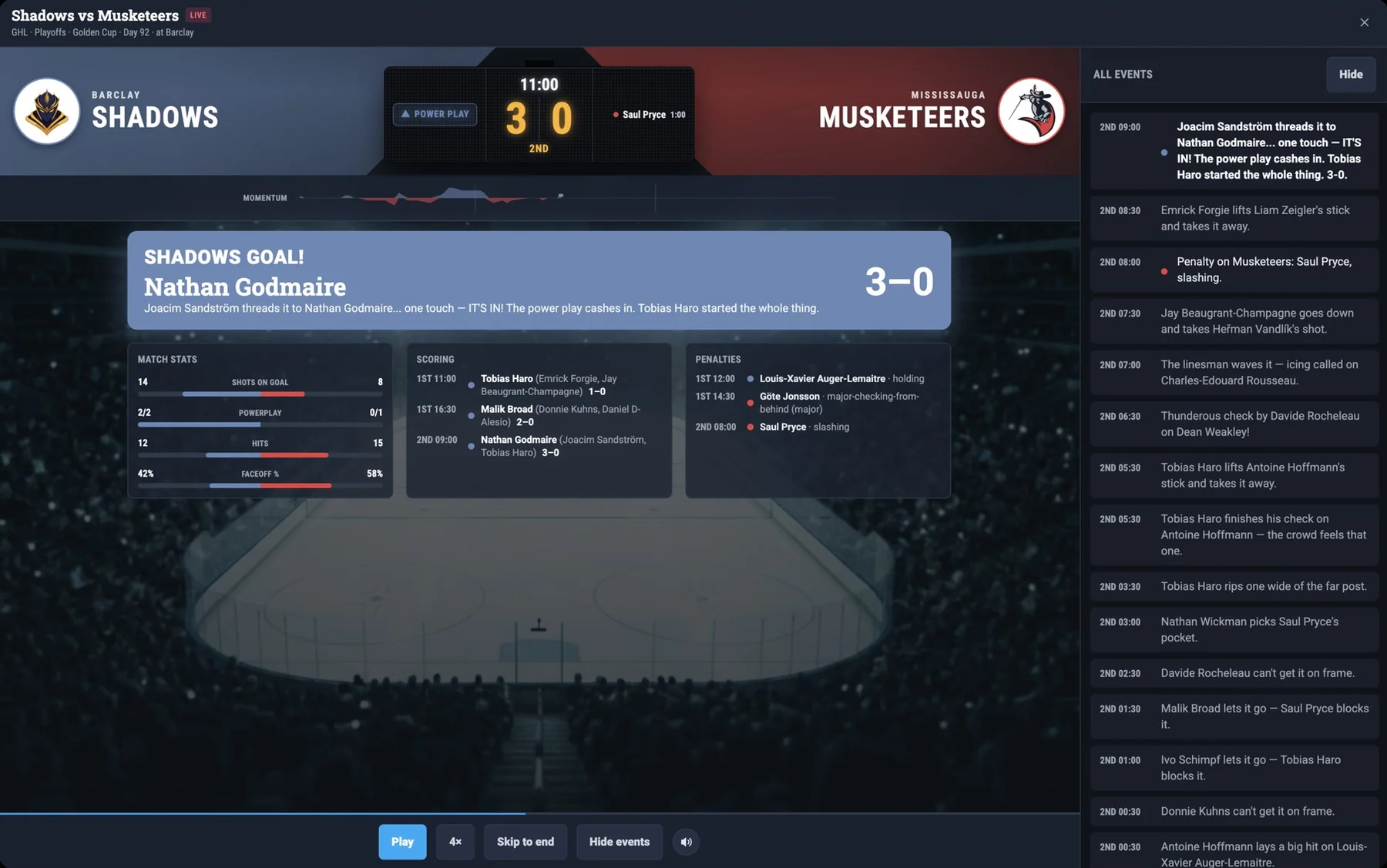
    A live game on a phone: the scoreboard, a goal banner and the live stats.
    Barclay Shadows and the Mississauga Musketeers, 3-0 on the power play.

    The game report

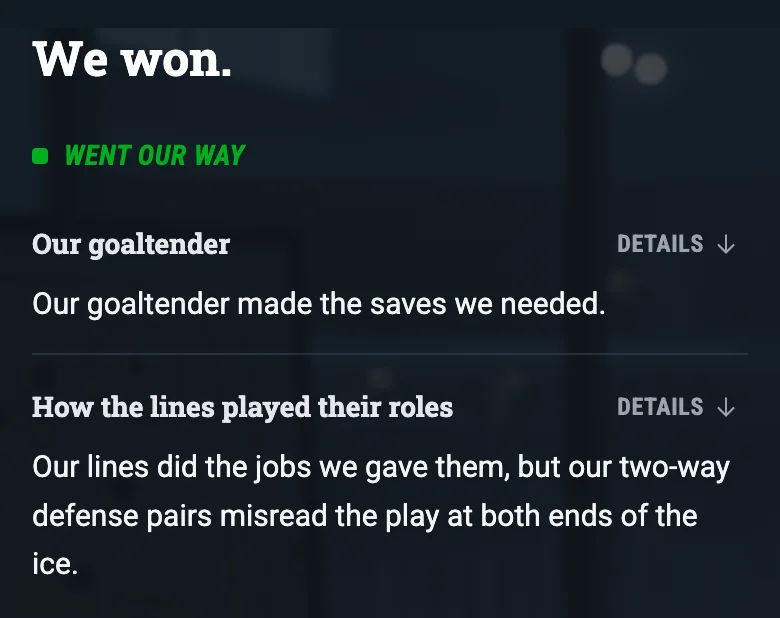
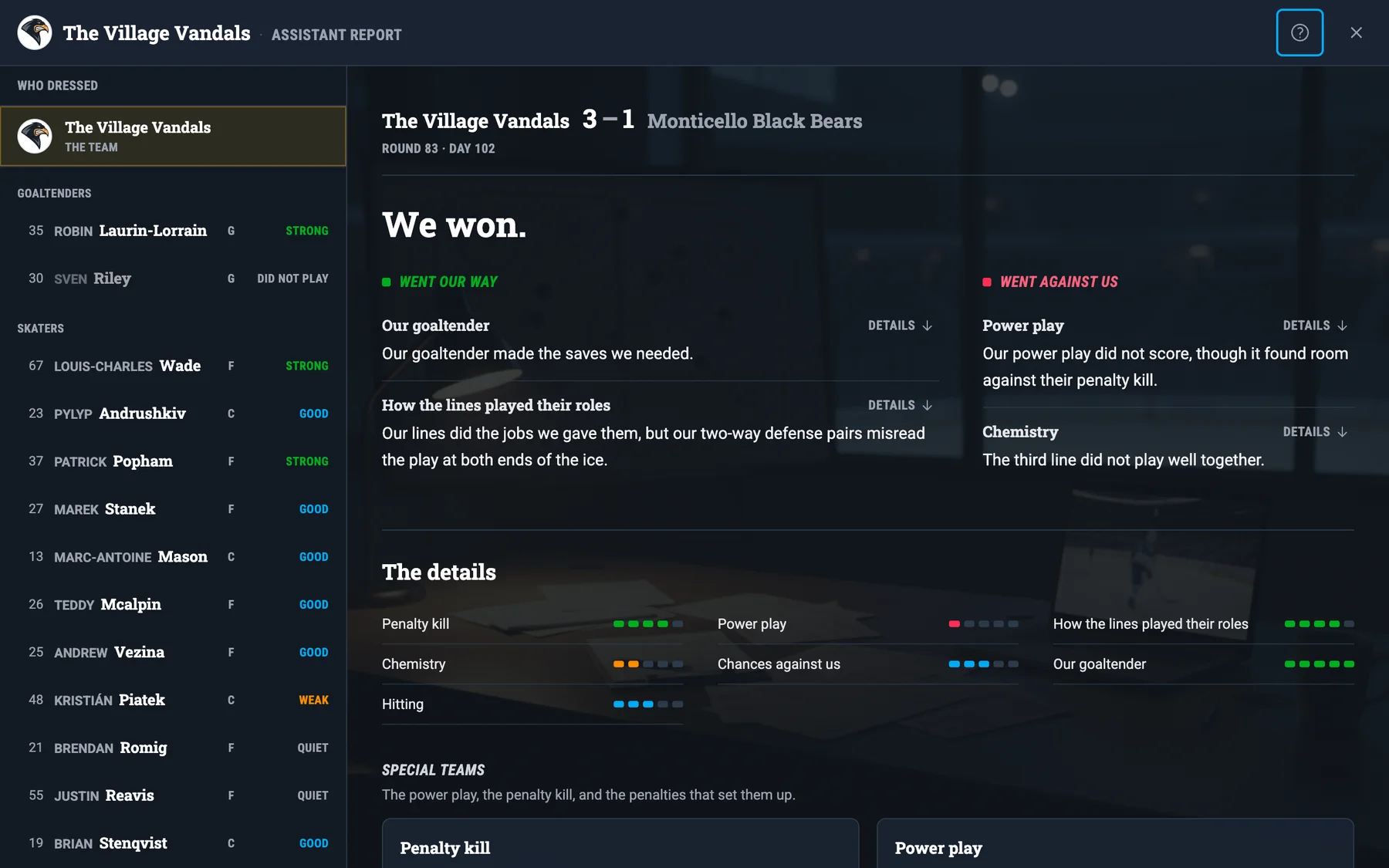
    After every game your assistant coach writes up how it went: what went our way and what went against us, how the lines played the roles you gave them, and how each player answered what his role asked of him. It explains, and leaves the conclusions to you.

    The game report on a phone: the verdict 'We won.' over what went our way and what went against us.
    The assistant's report after the Village Vandals beat the Monticello Black Bears 3-1.

    Confidence, earned

    Team confidence now moves on games alone, measured against what your roster and home ice should produce. Taking an opponent lightly is a matter of preparation, and a bench that falls behind can wake up at a period break.

    The team spirit panel on a phone: offensive and defensive confidence, and the dressing room.
    Team spirit on the Village Vandals' team page: confidence at both ends of the ice, and the dressing room.

    From the community

    Asked for by managers who play the game.

    • Line chemistry in Edit Lineup. See how well your lines and pairs know each other while you build the lineup, not only in the report after the game.
    • All-time leaders. The team's history ranks every player who has worn the jersey, with their stats.
    • Roster rankings. Your team's home page rates your forwards, defense and goaltending against every club in your league and shows where your roster is thin. Breakdown on the roster shows what is behind each rating.

    New

    • Saved lineups. Keep several lineups ready and load the one the next game calls for.
    • Hide results. If you like, after your club has played the game waits for you to watch it or reveal the result, so nothing is spoiled.
    • The player panel. Open any player from wherever you see his name: the roster, the lineup, a trade, the chat.
    • Player faces. Every player has a face of his own.
    • A dark look built for the phone. The whole game works on a phone as well as on a desktop.
    • The depth chart. Your lines, pairs and goalies laid out on the roster, straight from your lineup.
    • Expected goals. xG for every game, player and team, and GSAx for goalies: how good the chances were, not only how many.
    • Your own club logo. With Premium, put a logo of your own on your club in place of its mascot. Every logo is looked at before any other manager sees it.
    • The crest on your jersey. With Premium, let the crest stand alone on the front of the jersey without the team name, and make it larger or smaller and move it up or down.
    • More jersey blocks. Yokes, chest bands, side panels, cuffs and more to build your jersey from, with Premium.
    • The changelog. This page: what changes in the game, release by release.

    The engine

    • Shooter against goalie. The shooter’s skill against the goalie’s decides more of every chance. A sniper finds the net more often against a weak goalie, and a great goalie stands taller against an ordinary shooter.
    • Shot blocking. A blocked shot never reaches the goalie, so a defenseman who gets in front of shots can take a goal away.
    • Missed shots. Shots can miss the net. You see them on the game page, in the live game and in the play-by-play.
    • Shots from distance beat a goalie now and then.
    • Sustained pressure. A team can hold the zone and shoot again in the same shift, and the top league plays to NHL shot totals.
    • Giveaways and takeaways come from who is up against whom.
    • Rougher lower leagues. Further down the ladder the game opens up and gets rougher: more goals, more penalties, more fights.
    • Team focus sets how much risk your team takes, instead of trading one strength for another.
    • Roles. Every role asks as much of a player as the next, and a role he does not like costs him as intended.
    • Shootouts. Your shooters go first, in the order you set.
    • Penalty killers build chemistry together, like your other units.
    • Personality clashes count as clashes. Two players whose personalities are opposites used to read as the best possible fit. They now read as the clash they are, so a line built around such a pair can show weaker chemistry than it did on the old site.
    • A player who bridges a language gap helps his line now: a unit where everyone can reach everyone through someone gets along better than one split in two.
    • Steadier worlds. A crash in one game no longer pauses the whole world.

    The screens

    • The roster reads at a glance: each player’s condition, the ratings his role leans on, where his contract stands, and cards that carry his season so far.
    • The Scouting Center. Send your scouts after a player and read every report in one place.
    • Role cards that explain what each role does before you hand it out.
    • Sign in with an email code. No password to remember: enter your email address and type in the code you receive.
    • Notifications gather in one panel, one click from every page.
    • The training report. One report on the day your players develop, instead of a notice per player.
    • Editing your franchise. Every block shows as a jersey before you add it, and every city and team name is there to leaf through by letter.

    Rebuilt

    Everything else you know is still here, rebuilt for the new site: the chat, the youth draft, the pre-game view and the opponent report, transactions, the shortlist, the manager card, your preferences and the Manager’s Guide.